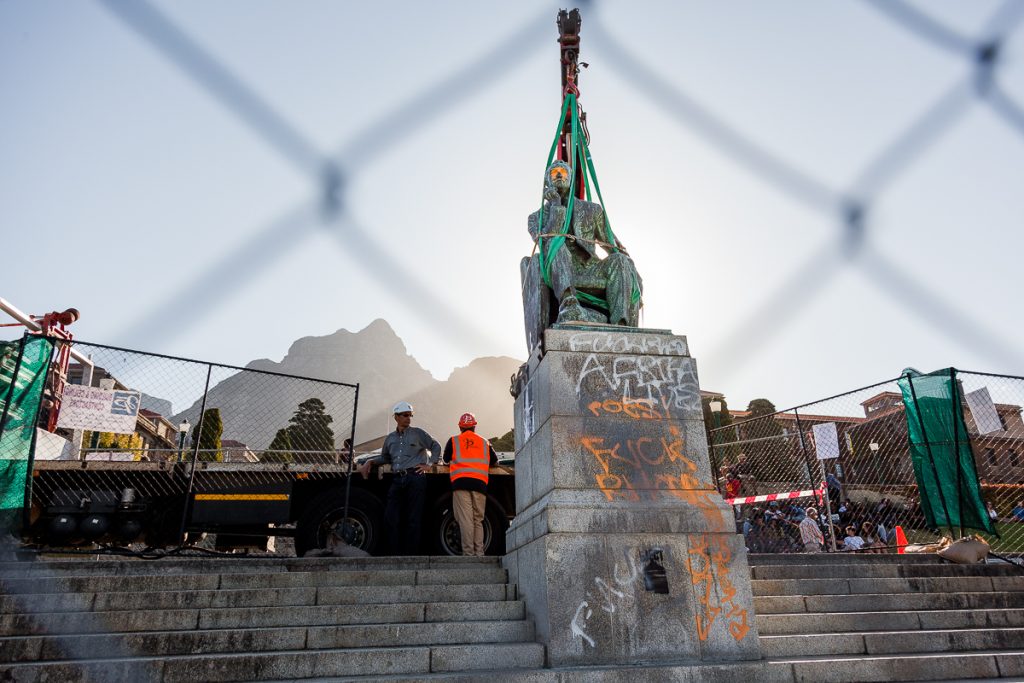
Rhodes Must Fall UCT culminated on 9 April 2015, when a crane lifted the bronze statue of Cecil John Rhodes from the upper campus of the University of Cape Town. The Rhodes Must Fall UCT movement had shaken the foundations of South African higher education and ignited a national conversation about colonial memory and decolonisation.
The Colonial History Behind Rhodes Must Fall UCT
Cecil John Rhodes, at the centre of the Rhodes Must Fall UCT campaign, made his fortune in diamond and gold mining. He served as Prime Minister of the Cape Colony from 1890 to 1896 and was the architect of the Glen Grey Act of 1894, legislation that laid the groundwork for the migrant labour system that would become apartheid. He founded the De Beers mining company and the territory of Rhodesia. His statue had stood at UCT since 1934. The Rhodes Must Fall UCT campaign began on 9 March 2015 when student Chumani Maxwele threw a bucket of human excrement at the monument, drawing attention to the fact that many Cape Flats residents still lacked proper sanitation while the university honoured a figure responsible for their dispossession.
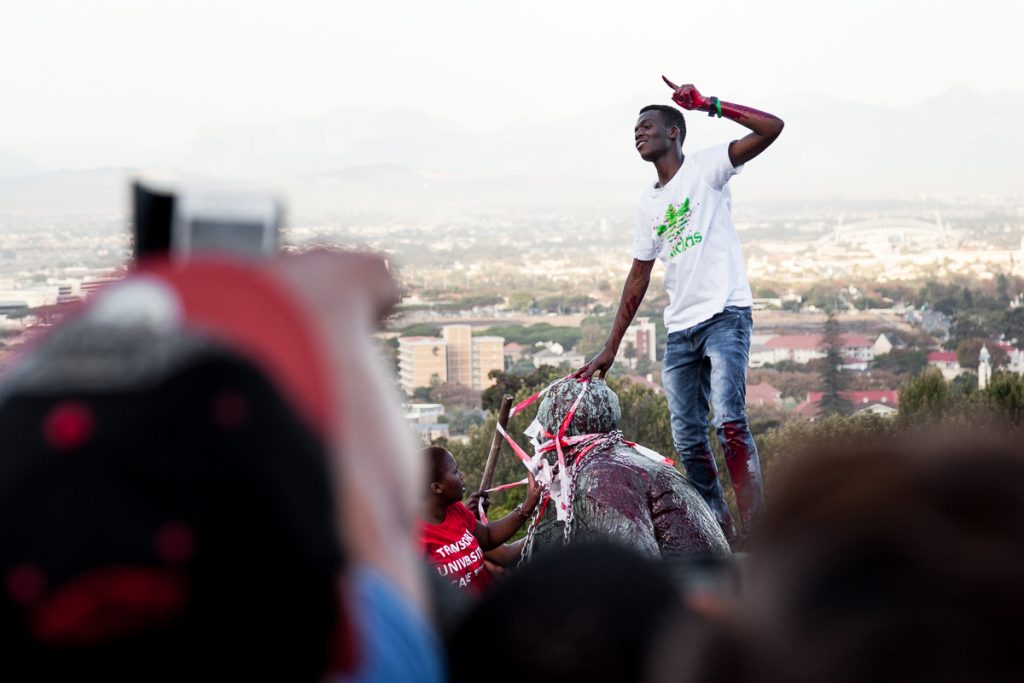
The Movement Beyond Rhodes Must Fall UCT
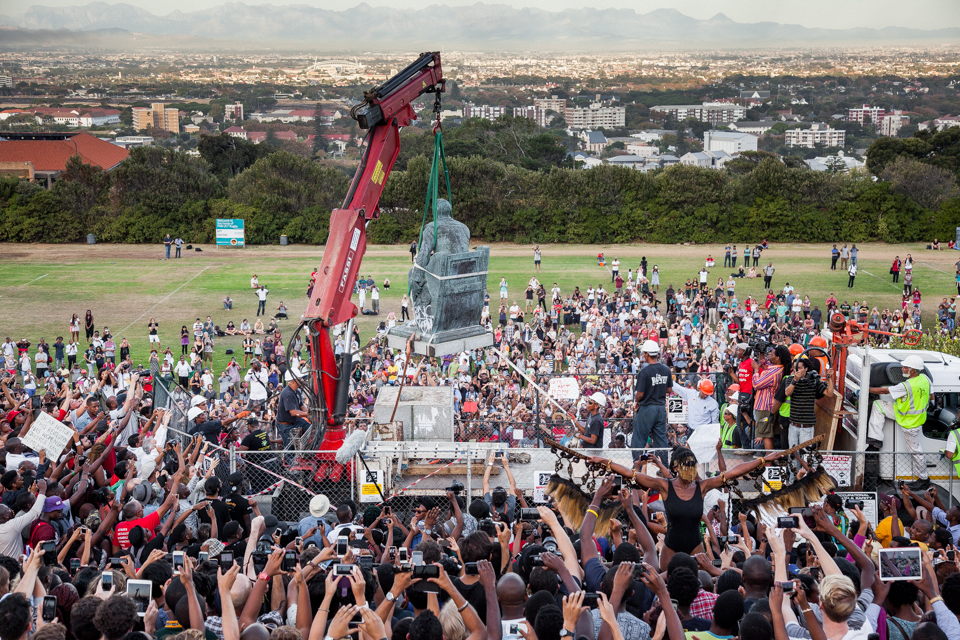
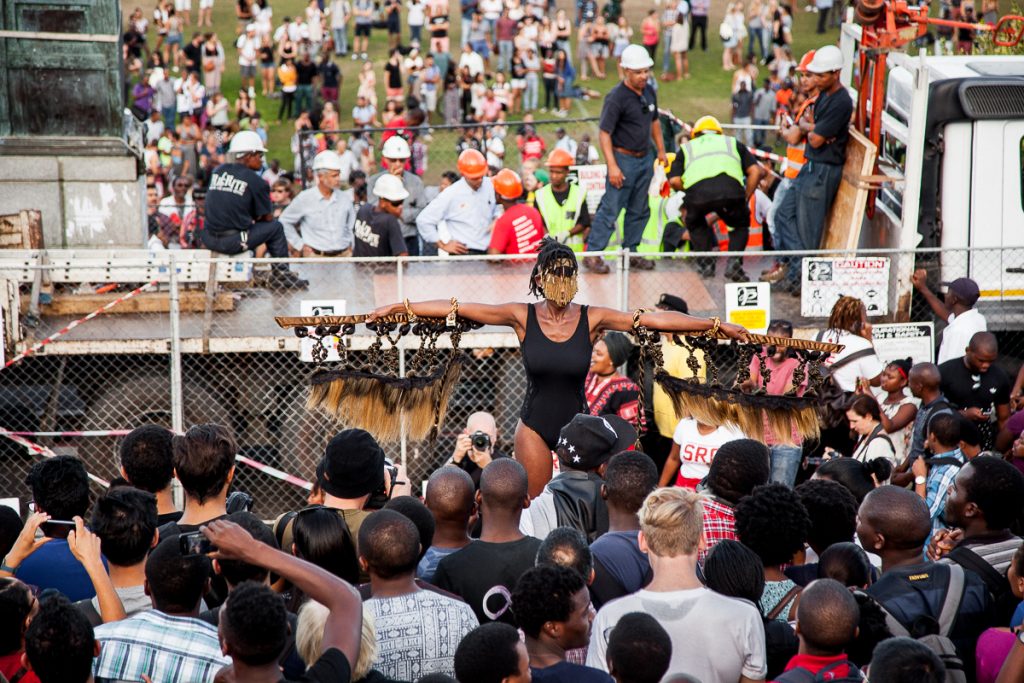
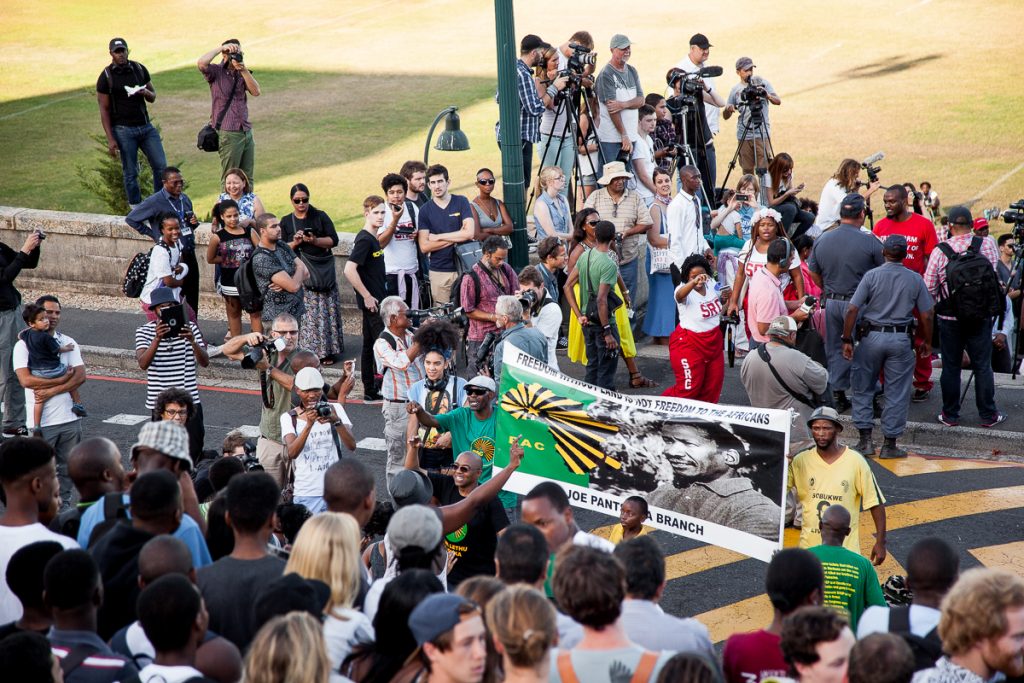
Rhodes Must Fall UCT quickly expanded beyond the question of the statue. Students raised broader questions about transformation: the Eurocentric curriculum, language policies, institutional culture, and who the post-apartheid university was actually designed to serve. The UCT Council voted on 27 March 2015 to remove the statue. Thousands gathered to watch on 9 April. Some celebrated. Others debated. The Rhodes Must Fall UCT moment became a catalyst for the nationwide Fees Must Fall movement later that year, demanding free, decolonised higher education across South Africa.
Documenting Rhodes Must Fall UCT
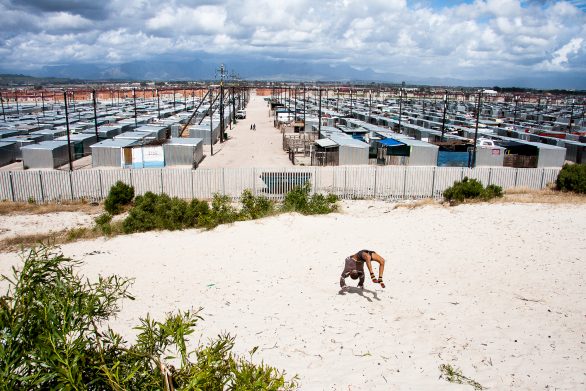
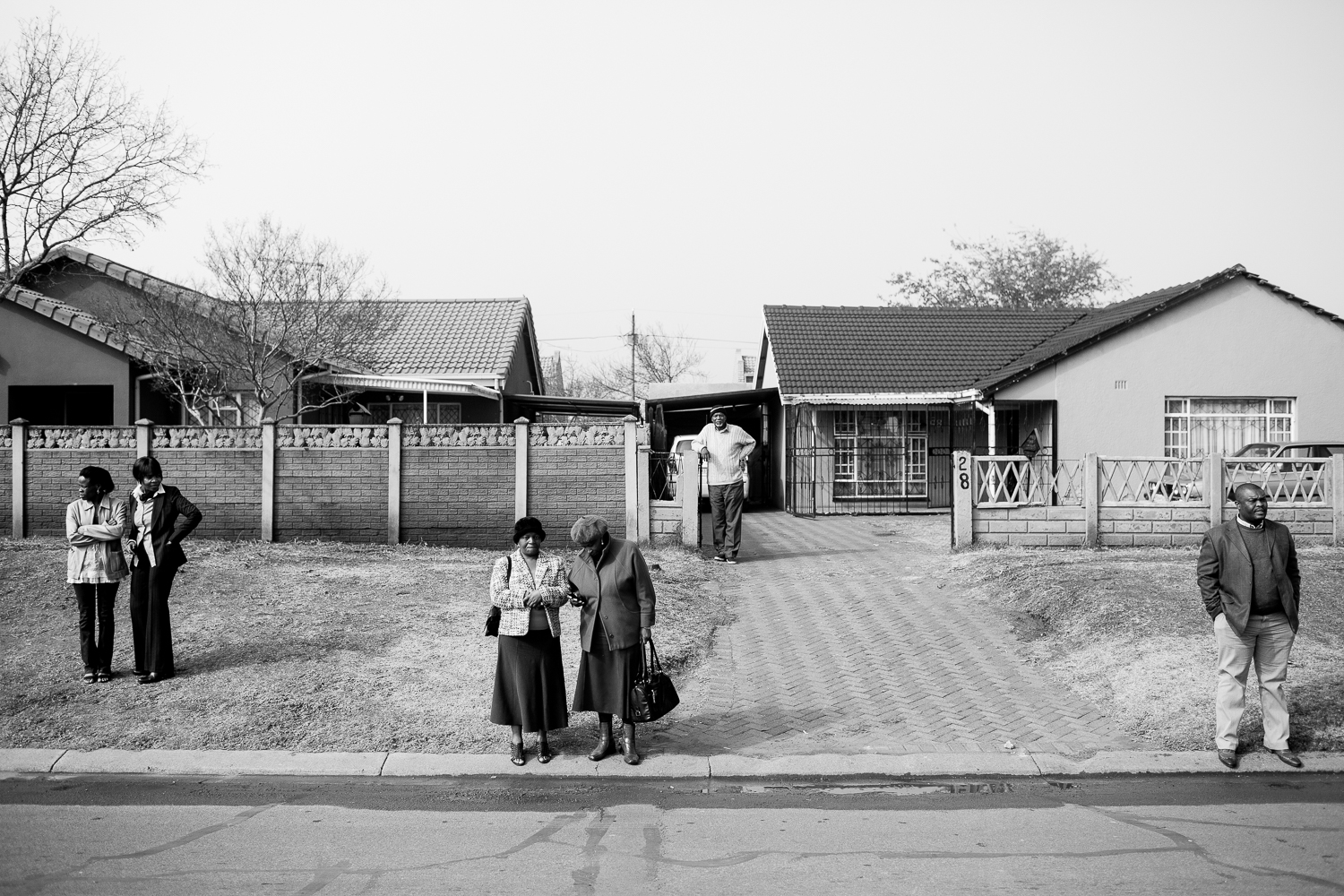
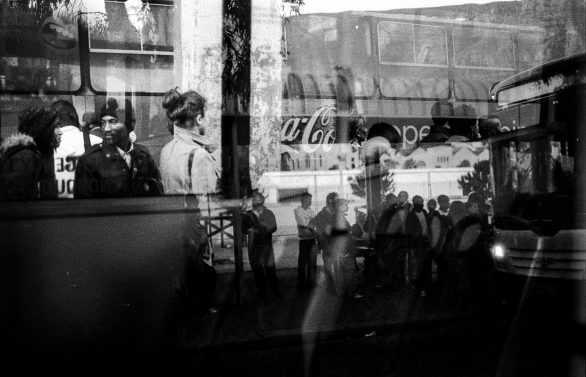
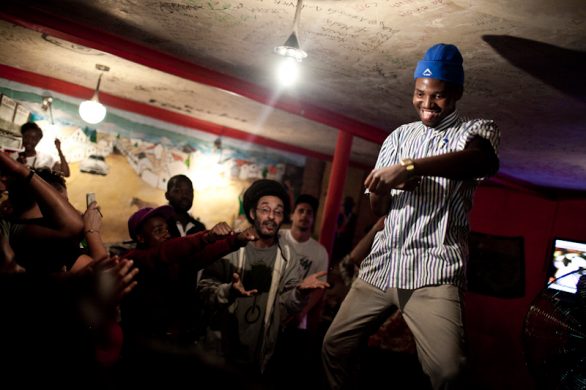
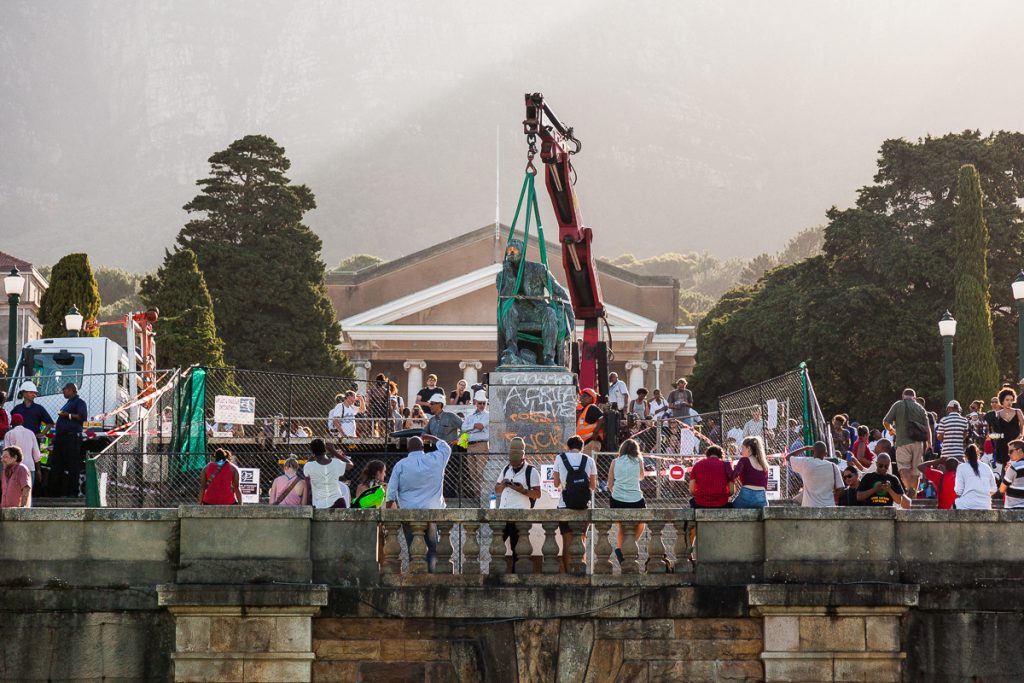
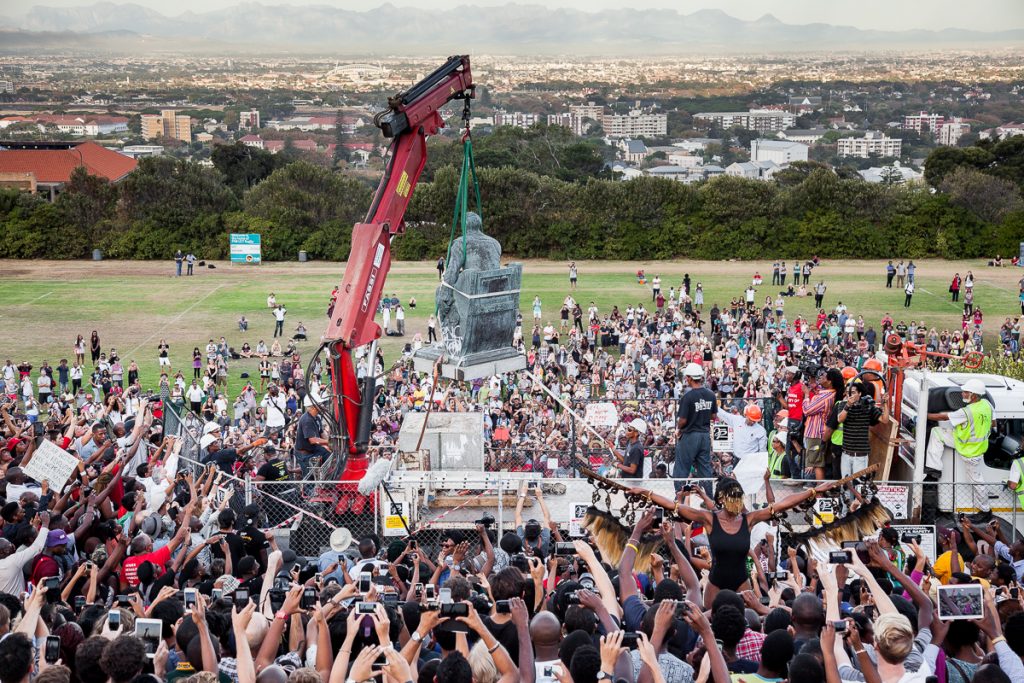
These photographs document the events of 9 April 2015 at the heart of the Rhodes Must Fall UCT movement: the crowd on the steps, the crane at work, the empty plinth, and the faces of the people who came to witness a symbol of colonial power being removed from one of Africa’s most prestigious universities. The images record a moment that was both an ending and a beginning, a day when the Rhodes Must Fall UCT campaign achieved its most visible demand and opened questions that South African institutions continue to grapple with.
Related projects: Ayanda Mabulu Artist Studio Cape Town, Gentrification Woodstock Cape Town

Outbound Links:
- Rhodes statue removed at UCT (SAHO): https://sahistory.org.za/dated-event/rhodes-statue-removed-uct
- Chumani Maxwele ignites #RhodesMustFall (SAHO): https://sahistory.org.za/dated-event/chumani-maxwele-ignites-rhodesmustfall-movement-uct
- Student protests in democratic South Africa (SAHO): https://sahistory.org.za/article/student-protests-democratic-south-africa
- University of Cape Town (SAHO): https://sahistory.org.za/place/university-cape-town
- Cecil John Rhodes: https://en.wikipedia.org/wiki/Cecil_Rhodes
- Fees Must Fall: https://en.wikipedia.org/wiki/FeesMustFall
- Glen Grey Act: https://en.wikipedia.org/wiki/Glen_Grey_Act